| Superficie | 1350 m² |
| Adresse | 232 Boulevard Leopold 2 - Koekelberg |
| Capacité | 10 personnes |
| Accès | Métro ligne 2, Simonis |
| Horaires | Sur rendez-vous |
History of a unique place
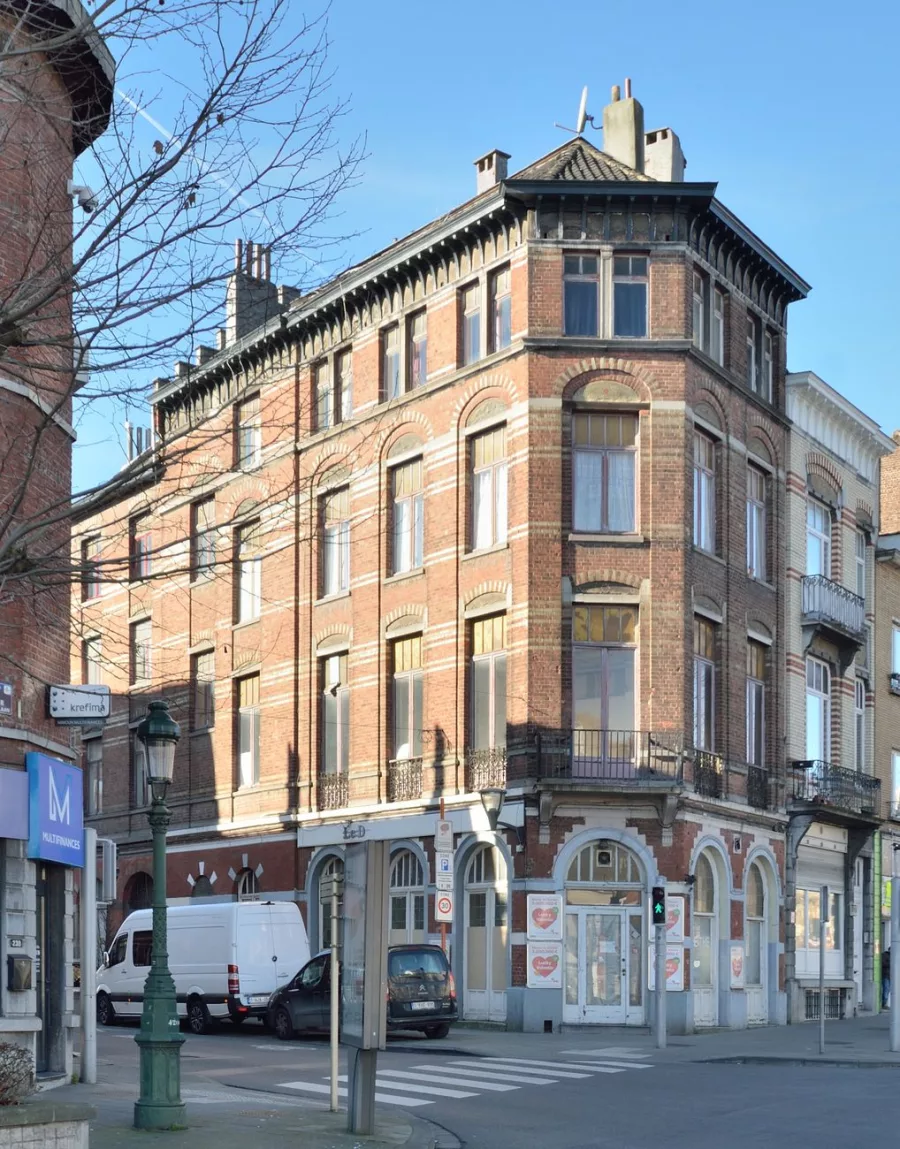
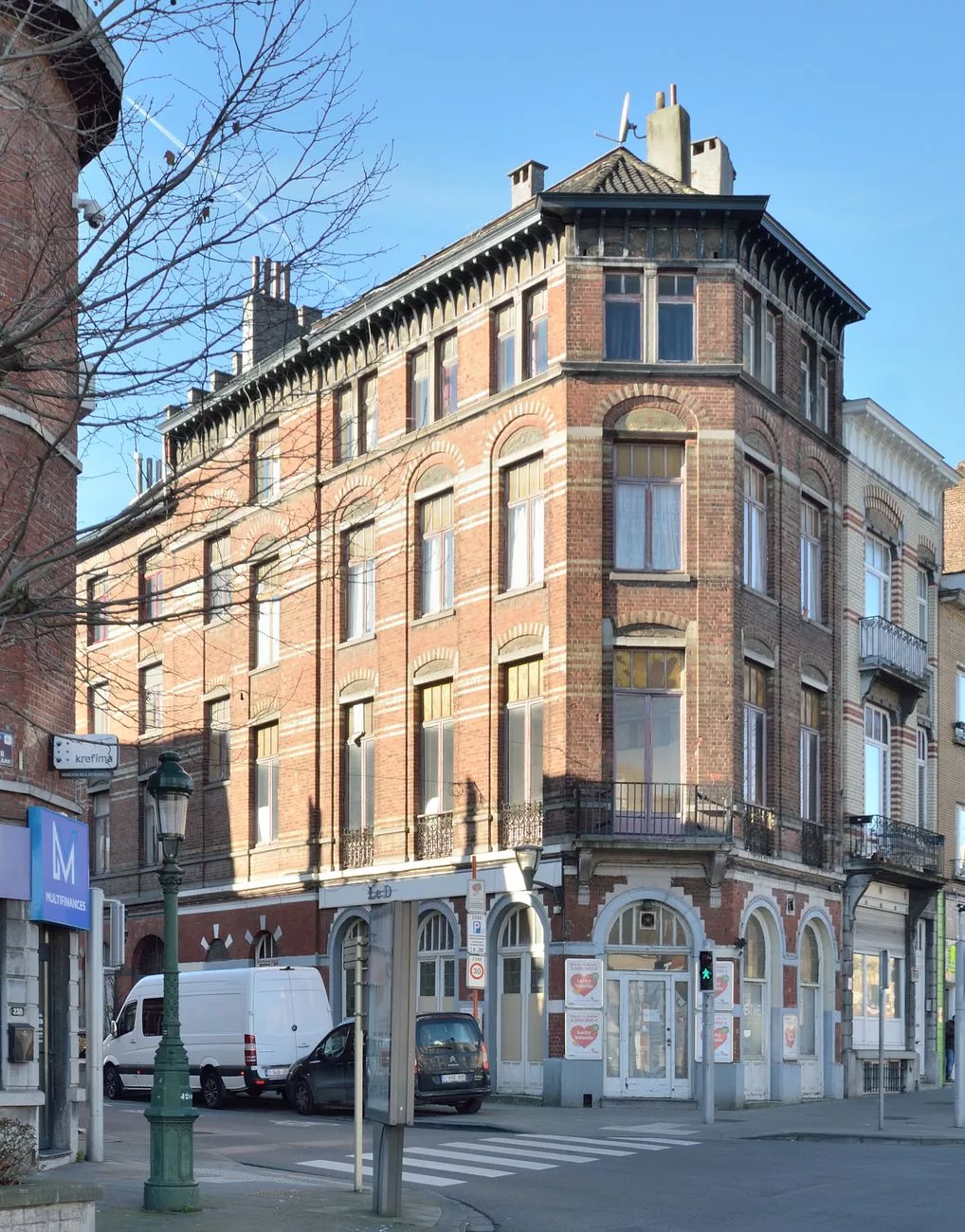
Built in 1902, the building located at the northern corner of Boulevard Léopold II and Rue de l'Église Sainte-Anne is a remarkable example of eclectic Art Nouveau-inspired architecture. Its red brick façade, punctuated by horizontal bands of white brick, is distinguished by a reversal of colors compared to the neighboring building at number 234, built in the same year. On the boulevard side, the window spandrels are decorated with sgraffito, while the projecting roof cornice rests on carved wooden corbels. The ground floor, which is used for commercial purposes, is largely open with a series of arcades.
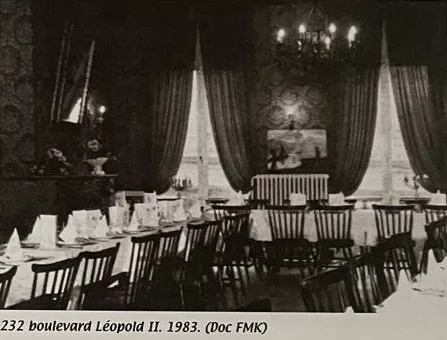
From the beginning of the 20th century, the building became a popular meeting place. Following the death in January 1904 of Léopold George, known as Marchal, former owner of a cabaret on Rue de l'Église Sainte-Anne, his widow moved in and ran the Café du Boulevard. The establishment enjoyed a solid reputation for the quality of its wines, liqueurs, and gueuze-lambic, and had spaces dedicated to meetings and banquets.
Taken over around 1911 by beer merchant Félix Putteman, the café became a meeting place for various associations, notably the Jeune Garde Libérale and, from 1919, the Union Symphonique de Koekelberg. The latter developed an intense cultural activity there, culminating in an artistic concert given on April 26, 1919, in the Lion d'Or hall, under the presidency ofMayor Émile Bossaert.
Between the 1930s and 1960s, the establishment was run by the Piermez-Decraene couple, before being taken over in the early 1970s by Mariette Van der Stael. Renamed “Chez Carlos et Mariette,” the café could then accommodate up to sixty people for private and professional events. It was known for its festive atmosphere, summed up by its slogan: “We dance on Saturdays and Sundays,” and for regularly hosting musical rehearsals.
At the end of the 20th century, the venue underwent further transformations. First renamed Entr'Acte, it then became Le Détroit de Gibraltar, under the management of Mohammed Ksadij. This name refers to one of the most strategic maritime passages in the world, connecting the Mediterranean to the Atlantic and separating Europe from Africa by a minimum distance of 14 kilometers, thus highlighting the symbolic and cultural dimension of the place.
The history of Boulevard Léopold II
Avenue Léopold II is one of Brussels' major urban thoroughfares. It connects the city center to the National Basilica of Koekelberg, crossing Molenbeek-Saint-Jean, and is part of an urban landscape that has undergone profound changes in recent decades.
For nearly thirty years, the avenue was marked by the presence of a road viaduct overlooking the surrounding buildings. In 1986, traffic was moved underground via the Leopold II tunnel—the longest in Belgium at 2.3 kilometers, renamed the Annie Cordy Tunnel following its renovation in 2022, marked a major turning point. The redevelopment of the area in 1990-1991 then ushered in a vast urban renewal program led by the Brussels regional authorities.
Located near the Tour & Taxis site, Avenue Léopold II is sometimes symbolically compared to the Champs-Élysées in Paris, particularly because of its westward orientation and monumental scale.